Events
Meet investors, business owners and advisers. Hear about their experience, ask questions and work through practical business cases.
Explore events CUPEC
Chulalongkorn Private Equity Club
Explore the people, ideas and decisions
behind investing in real businesses.
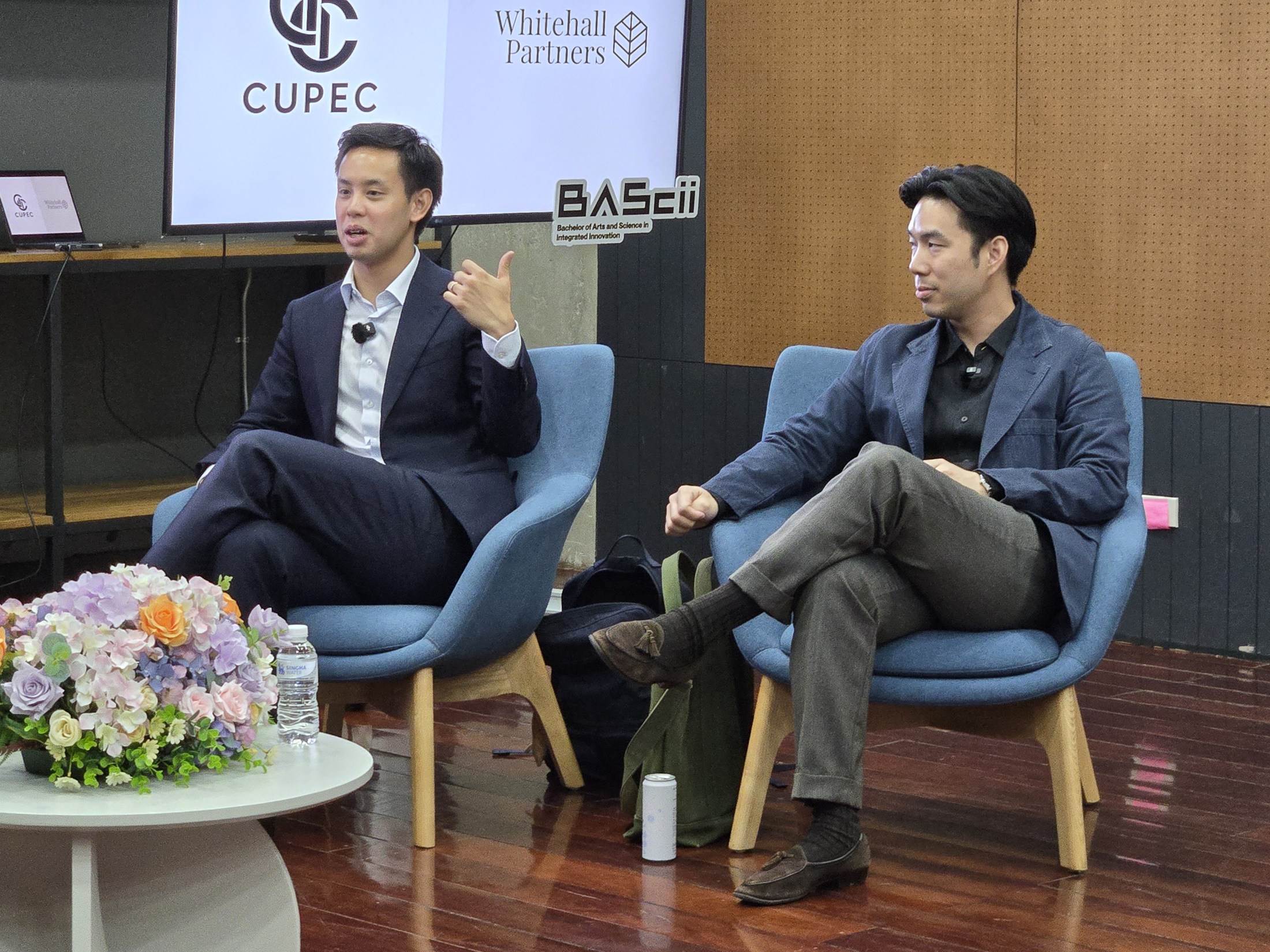
Chula Private Equity Club brings students together to understand how businesses are bought, financed and grown.
We learn from investors, business owners and advisers, ask better questions, and share ideas that make business ownership easier to understand.
New to private equity? Start herePrivate equity, explained
A ten-year comparison is a starting point. Explore the history, then learn how ownership, debt and time shape the outcome.
Explore private equity10-year annualized USD returns through 31 Dec 2025. PE net of fund fees; public benchmark adjusted for cash-flow timing. Source: Cambridge Associates. Past returns do not guarantee future results.
Bangkok, Thailand
Based at Chulalongkorn University. Open to people, businesses and ideas beyond campus.
Conversations with people in the industry. Practical challenges. A closer connection to the work.
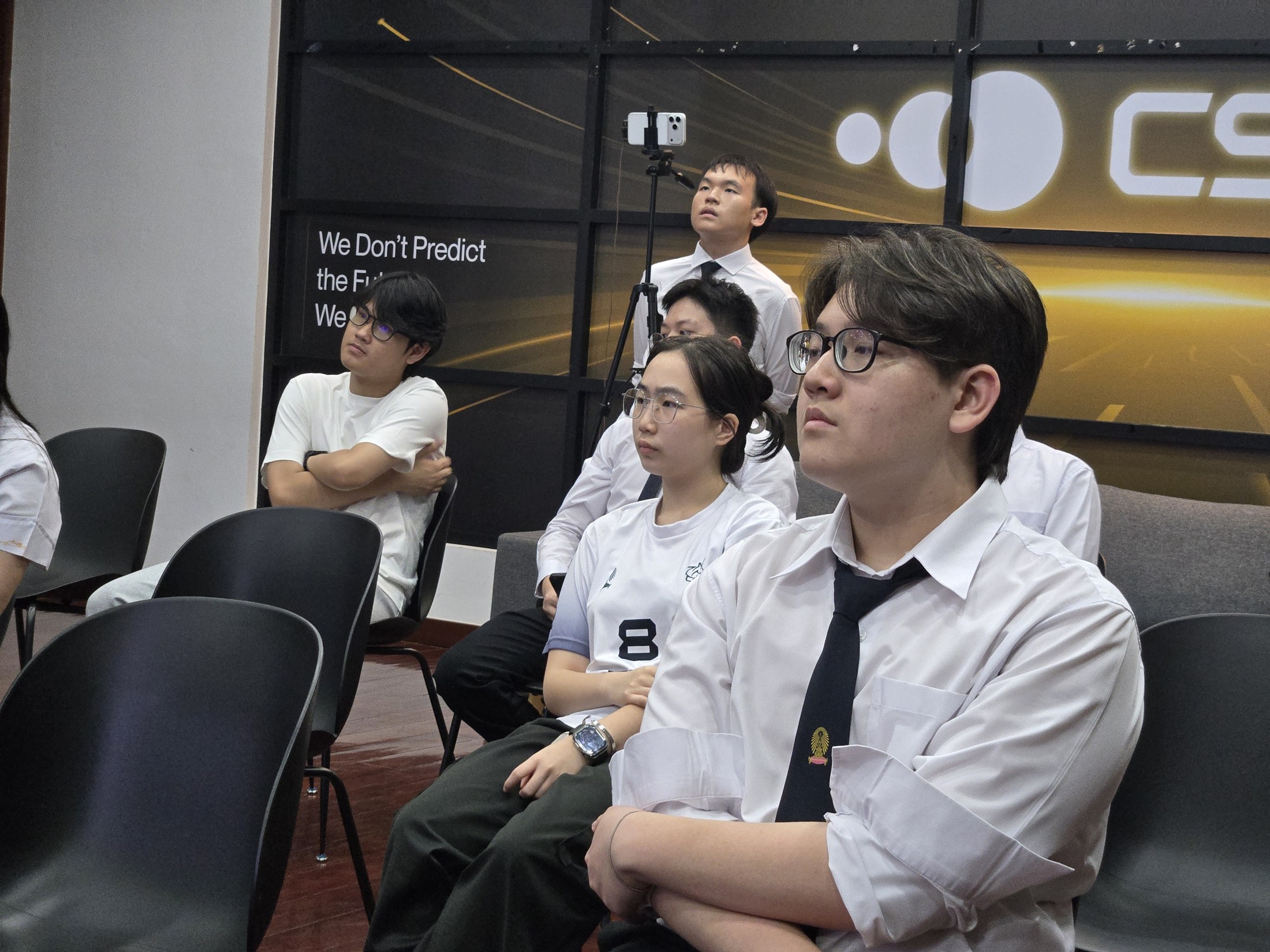
Bring your curiosity. Find people who share it.
Attend an event, create content or help bring the next conversation to life.
Join CUPEC
Students exploring investing and business ownership, together.
CUPEC is a student community at Chulalongkorn University for people interested in how businesses work, how investors make decisions and what it means to own and grow a company.
You can get to know the club through its events and educational media.
Meet investors, business owners and advisers. Hear about their experience, ask questions and work through practical business cases.
Explore eventsExplore explainers about private equity, notable investors and the decisions that shape businesses. Help make those ideas easier for other students to understand.
Explore mediaStart with an event or explore the media library. Members can help organize sessions, create content and bring new ideas into the club.
Investing in the ownership of a business that is not listed on a stock exchange.
Equity means an ownership stake in a company. Private means that its shares are not traded on a public stock exchange. The term private equity often refers to investment firms and funds that buy stakes in these businesses.
An investor might buy part of an established business or acquire control of the company. The aim is to make that ownership stake more valuable over time, but returns are not guaranteed.
Study its customers, products, finances and risks. Decide what the business may be worth and what could improve.
Agree on a price and ownership stake. Investors may work with management to improve operations, support growth or make acquisitions.
Investors may eventually sell their stake, sell the company or take it public. Some businesses also distribute profits to their owners.
Learn by doing
Open a short lesson, move the numbers, and see what changes.
Imagine an investor buys a stake in a privately owned manufacturer. The company improves its production process and wins new customers. If its earnings grow and a future buyer values it more highly, the investor's stake may become more valuable. If performance worsens, it can lose value.
01 / Historical returns
The US private-equity benchmark returned 15.2% a year over ten years, after fund fees. That is a pooled benchmark—not the return every fund or investor earned.
10-year annualized return · USD · through 31 Dec 2025
Source: Cambridge Associates, calendar-year 2025 benchmarks ↗. Historical performance does not guarantee future returns.
PE uses pooled internal rates of return (IRR), net of fees, expenses and carried interest. Public benchmarks use modified public market equivalents (mPME), matching the timing of private-fund cash flows. This does not equalize risk or liquidity. Private returns include unrealized valuations. One-year returns are cumulative; longer periods are annualized.
| Period | US PE | S&P 500 mPME | Russell 2000 mPME |
|---|---|---|---|
| 1 year | 8.7 | 17.9 | 12.9 |
| 5 years | 11.7 | 14.9 | 6.8 |
| 10 years | 15.2 | 15.1 | 9.9 |
| 20 years | 13.2 | 11.3 | 8.7 |
02 / A market with scale
Global private-equity investment in 2025, up from $1.8 trillion in 2024—an increase of approximately 17%.
Technology, industrial businesses and energy attracted substantial investment. Private equity reaches well beyond finance into the companies and services people use every day.
Bars start at zero · investment value, not assets under management
Growth is not uniform. Deal count fell from 20,836 to 19,093 in the same period. More money went into fewer, larger deals; a rising total does not mean every fund or business performed well.
Source: KPMG, Q4 2025 Pulse of Private Equity ↗. Approximate growth calculated from the published, rounded totals.
Public shares: ownership in listed companies can usually be bought and sold on an exchange. Private-company stakes generally take longer to sell.
Venture capital: typically backs younger companies with high growth ambitions. Buyout and growth-equity investors often focus on more established businesses. These approaches overlap within the wider world of private capital.
A loan: a lender is owed repayment under agreed terms. An equity investor owns a share of the business and participates in its upside and downside.
A business can underperform, debt can strain its cash flow, or a buyer may not pay the expected price. Private equity investments can be difficult to sell and may tie up money for years.
Meet investors and operators. Ask questions. Put ideas into practice.
Choose a real company, propose a fair market price, structure the deal and develop a 3-, 5- and 10-year plan.
How do you manage ฿2,000,000,000? With Tun Thunyatorn Nattatum.
5:30–6:30 PM · Room 409, CSII
The legal side of acquisitions, investment structuring and private capital.
PAST EVENTS
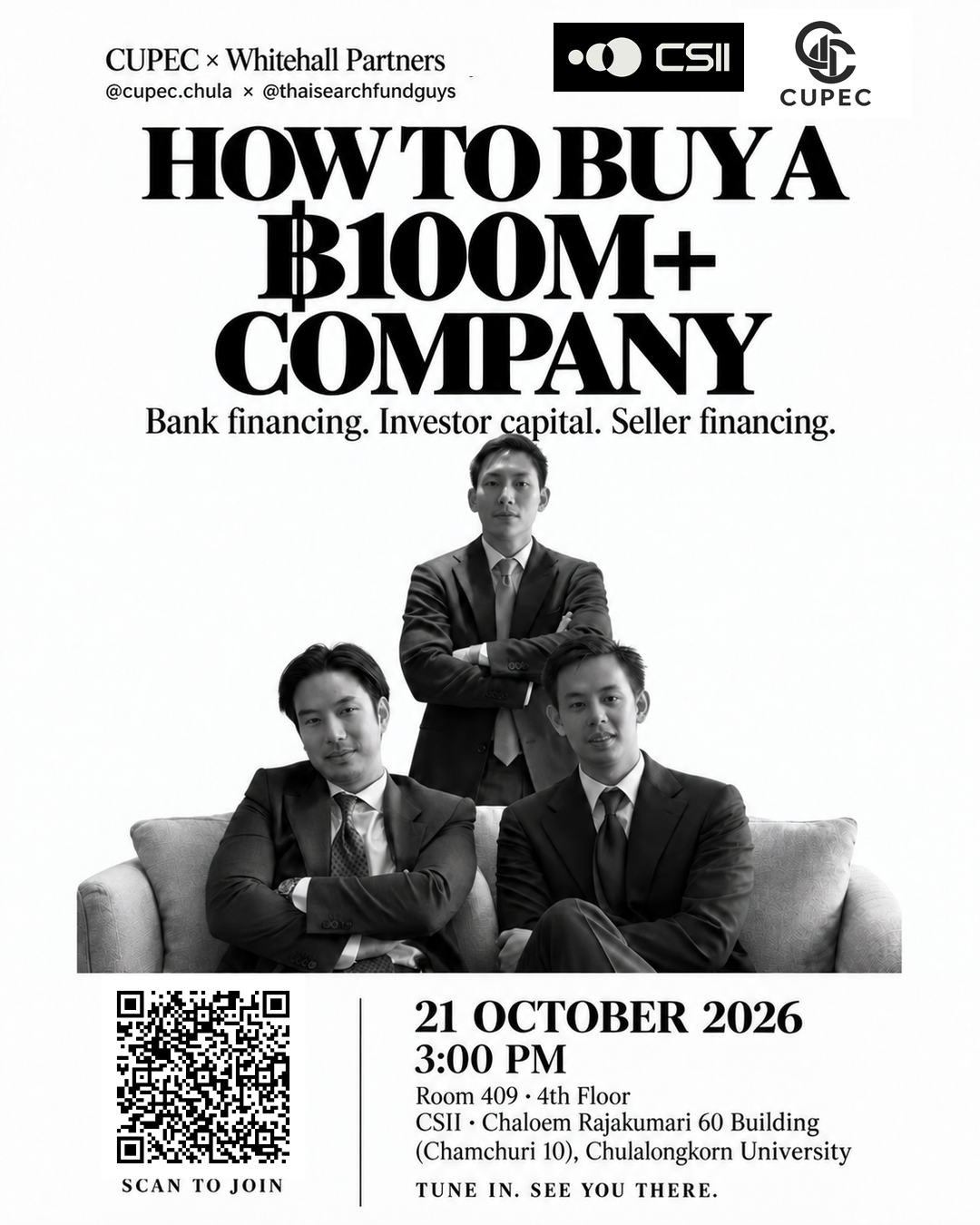
PAST EVENT · 21 OCTOBER 2026
How to buy a ฿100M+ company.
Our Whitehall Partners session brought the discussion of business ownership into the room: how opportunities are found, how acquisitions are financed, and what it takes to run a business after buying it.
Event recap drawn from the organizing team’s discussion. The image is the original event poster.
In the team’s reflection, the roughly 25-person session made it easier to engage with the speakers and get to know them. The ambition is to keep building those connections between students and people working in the industry.
10 NOVEMBER 2026 · SPEAKER SESSION
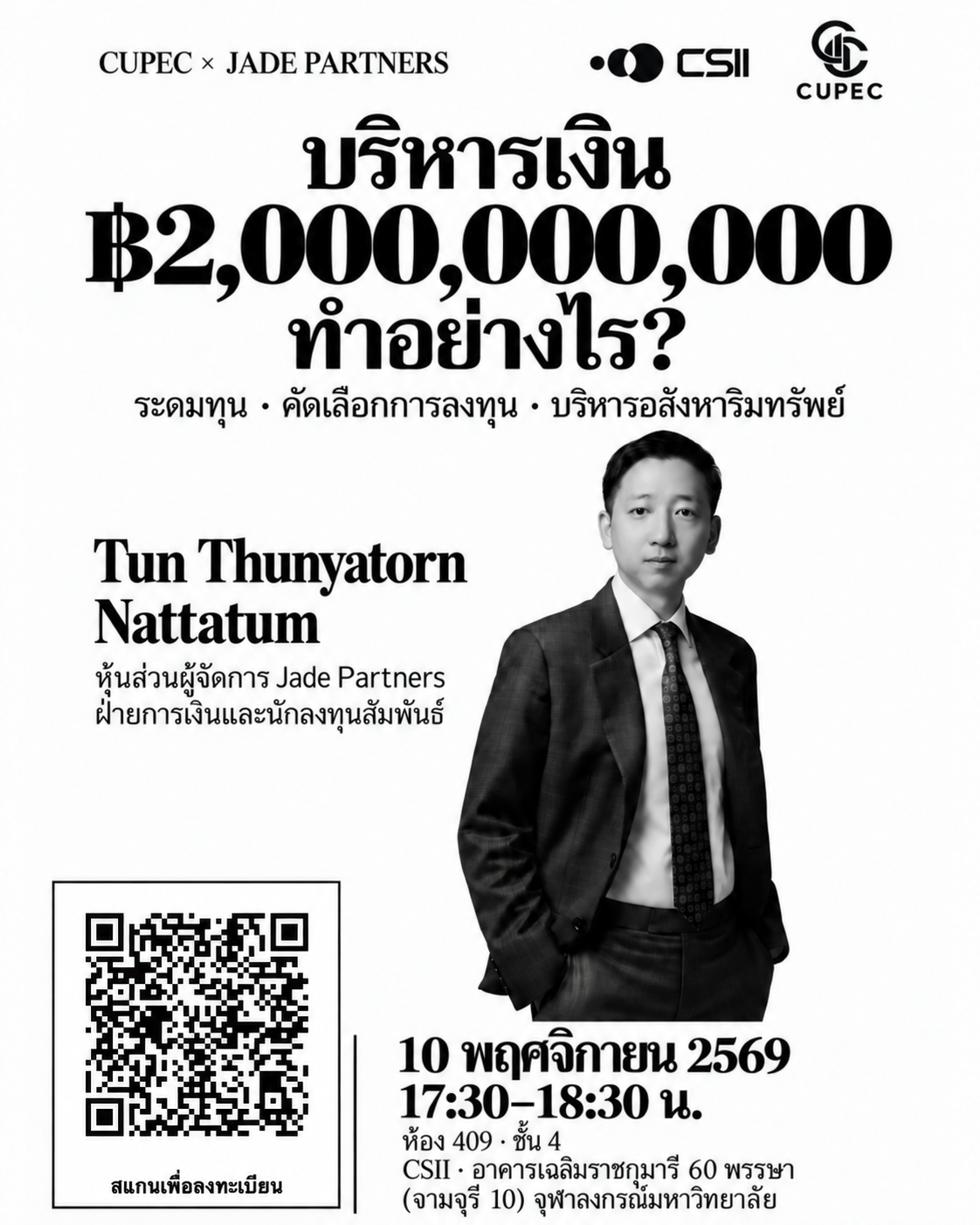
How do you manage ฿2,000,000,000?
Raising capital. Choosing investments. Managing real estate.
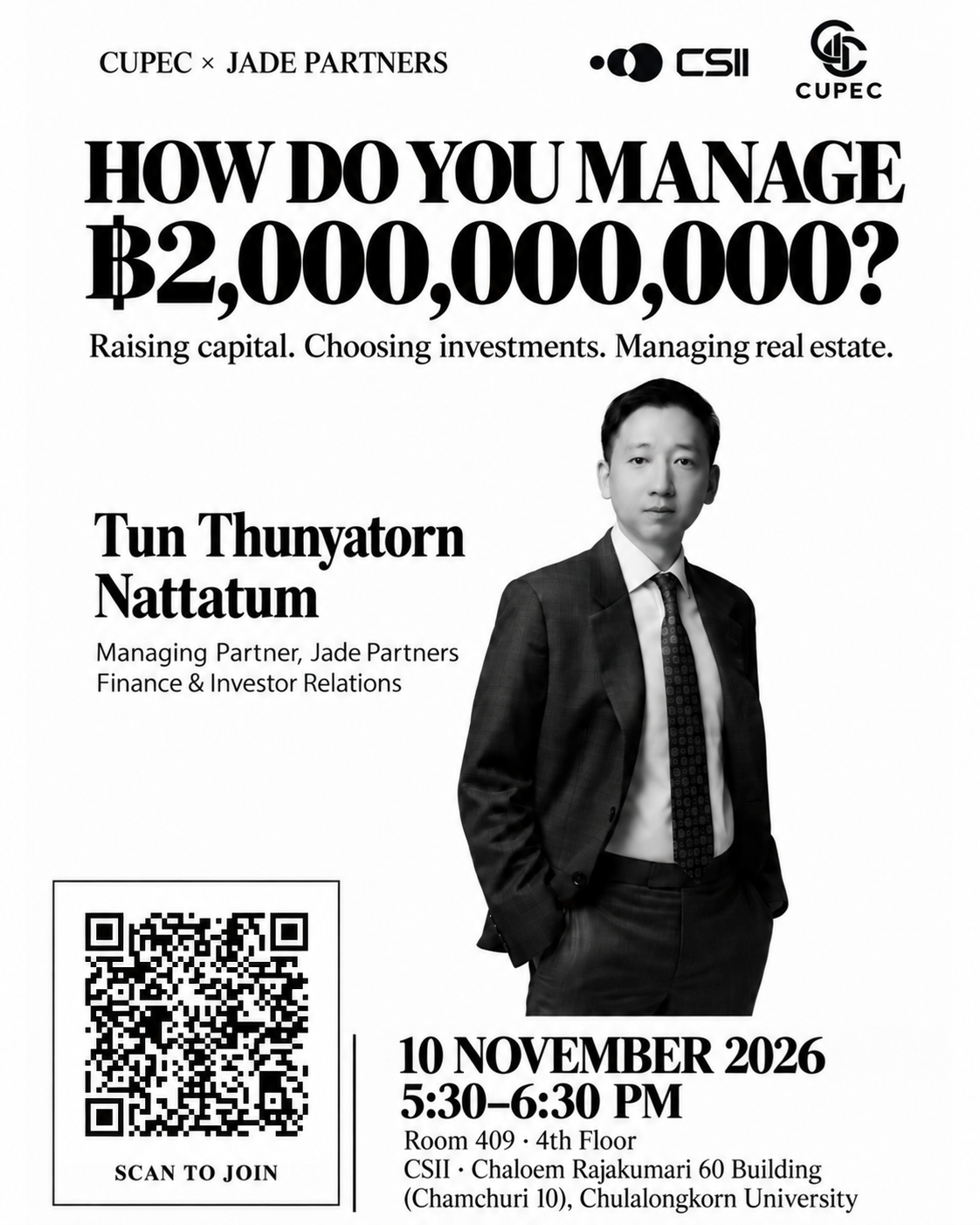
Managing Partner, Jade Partners
Finance & Investor Relations
26 JANUARY 2027 · PLANNED SESSION
The legal work behind private equity, venture capital and acquisitions.
The team’s planned session features Papon (Paul) Charoenpao, Founding Managing Partner of PDLegal Thailand, with a focus on the legal side of investment structuring and transactions.
Venue and registration details will be added to this page.
Follow event updatesResearch & analysis
Investment theses, company research and the work we do to understand and improve businesses.

A collection of ten real businesses, with five-year income-statement data, company summaries and links to the official DBD records. Prepared as the research foundation for the Value Creation Challenge.
These are financial summaries and case materials, not completed investment recommendations.
INITIATIVES IN DEVELOPMENT
Study an SME, develop ideas for improving it, and work with its owner to understand what is practical—from operating processes to technology and automation.
No completed company engagement is being claimed here.
Research businesses, assess their numbers, develop an investment view and explore how to approach owners or share relevant opportunities with industry contacts.
Member theses and project results will appear here as they are ready to share.
Company analysis, an operating experiment, an investment thesis or a project presentation—this is where members’ work belongs.
Contact CUPEC about your projectTRY THE MECHANICS
Start with a fictional cash-flow model, then compare the companies in our research collection.
Revenue is the starting point. Operating costs, interest, tax, reinvestment and debt repayments determine how much cash is left.
Fictional annual model: operating costs 70% of revenue; interest 8% of debt; tax 20% of positive profit before tax; reinvestment ฿80k; principal repayment ฿60k. Tax is illustrative. Opening cash and working-capital changes are excluded.
Who puts money in, who gets paid, and who owns the business? Select a participant.
Investors contribute equity. They own the buyer and receive what is left after creditors have been paid. Their return is uncertain; equity is not a scheduled repayment.
Compare reported revenue over five years. These are the existing CUPEC research records, not live market data.
YOUR TURN TO DECIDE
Buy one of three fictional companies and put your growth ideas to the test.
The CUPEC library
Published on @cupec.chula, in order from oldest to newest. Read each complete carousel and its original caption, or open the Instagram post.
No matching pieces. Try another topic.
Interactive game
Own a business for five years. Set the deal, choose a strategy each year, and see what investors get back.
Fictional companies and simplified finance. All money is in Thai baht. Your progress stays in this browser tab.
JOIN CUPEC
Explore how companies are bought, financed and grown. Meet people working in the industry and turn your curiosity into conversations, content and practical ideas.
Open membership formYou can contribute across teams as your interests develop.
Explore our events and media, or message us on Instagram.